A car that will not start is rarely a mystery, but it is often misdiagnosed. A flat battery, a failing alternator, a worn starter motor and a parasitic drain all produce the same symptom on the day — and only one of them is fixed by a new battery.
We test the whole charging circuit rather than replacing the most obvious component, which is what stops the same fault reappearing a fortnight later.
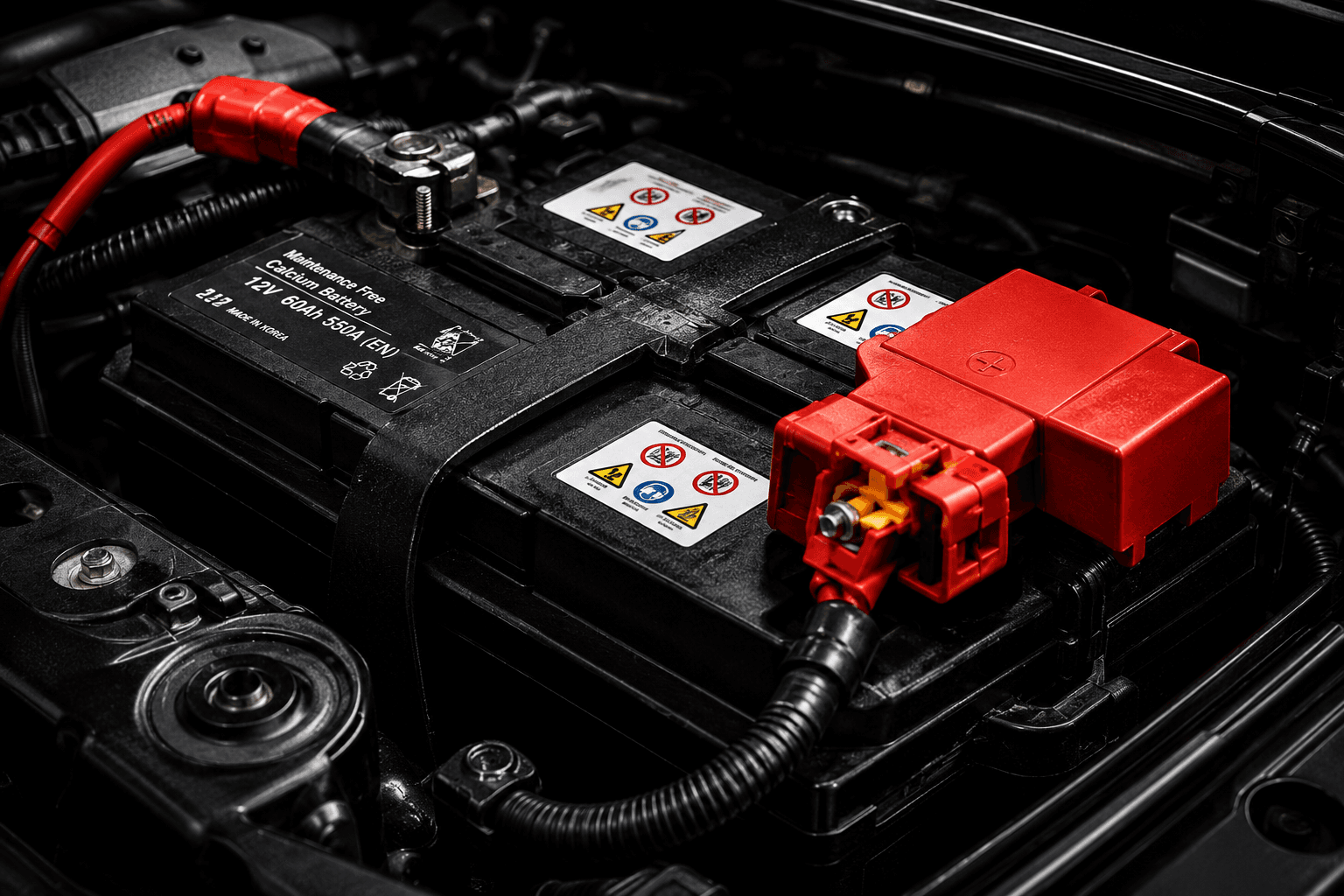
A guide to what this work typically covers. The exact scope depends on your vehicle and what we find once it's on the hoist.
Especially on the first start of a cold morning — often the first warning a battery gives.
A healthy vehicle should sit for well over a week. If yours does not, something is drawing current.
Voltage that moves with engine speed points at the charging system rather than the battery.
This warns about charging, not the battery itself. Treat it as urgent — the vehicle is running on stored charge.
Many vehicles with stop-start systems or smart charging monitor the age and type of the fitted battery. Replacing one without registering it to the vehicle's battery management system can leave the new battery undercharged and shorten its life considerably.
Australian summers are harder on batteries than winters. Heat accelerates the internal chemistry, and the failure usually shows up on the first genuinely cold morning that follows. Testing before winter is worth more than testing after it.
If your question isn't covered here, call the workshop and we'll talk it through.
Yes — battery and charging system testing is part of every service, and we are happy to test one on its own if you have any doubts.
Tell us about your vehicle and we'll take it from there.