Four contact patches, each about the size of your hand, carry every input the car makes — steering, braking and acceleration. Tread depth, pressure and alignment decide how much grip those patches actually have, particularly in the wet.
The legal minimum tread depth in Australia is 1.5 mm across the tread, but wet weather braking distances begin to lengthen noticeably well before that point.
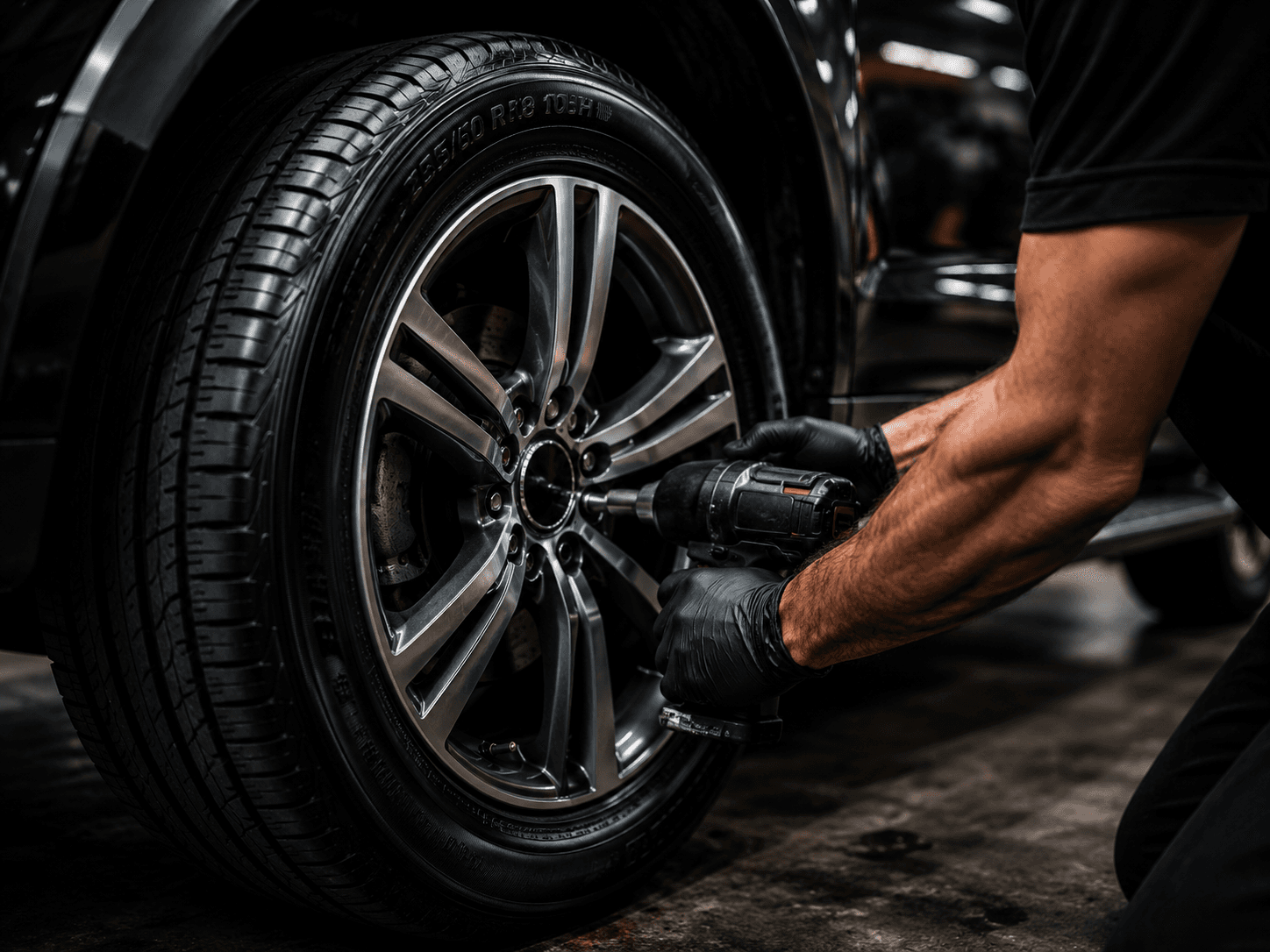
A guide to what this work typically covers. The exact scope depends on your vehicle and what we find once it's on the hoist.
Wear on one shoulder usually points to alignment; wear on both shoulders or down the centre points to pressures.
A steering wheel that shimmies around 90–100 km/h is most often a balance issue.
If the car drifts on a flat road, alignment is the first thing to check.
Tyres age even when barely driven. Perishing on a tyre with plenty of tread still means replacement.
Underinflated tyres run hotter, wear at the shoulders, use more fuel and respond more slowly to steering input. The correct pressures are on the placard inside the driver's door frame or the fuel filler flap — not on the tyre sidewall, which shows a maximum rather than a recommendation.
Fitting new tyres to a vehicle that is out of alignment can scrub a set out in a fraction of its expected life. Checking the alignment when tyres are replaced is the cheapest insurance available on that purchase.
If your question isn't covered here, call the workshop and we'll talk it through.
Commonly every service, or around every 10,000 km, depending on the vehicle and whether it is front, rear or all-wheel drive. Some vehicles with staggered or directional tyres cannot be rotated in the usual way — we will tell you if yours is one of them.
Tell us about your vehicle and we'll take it from there.