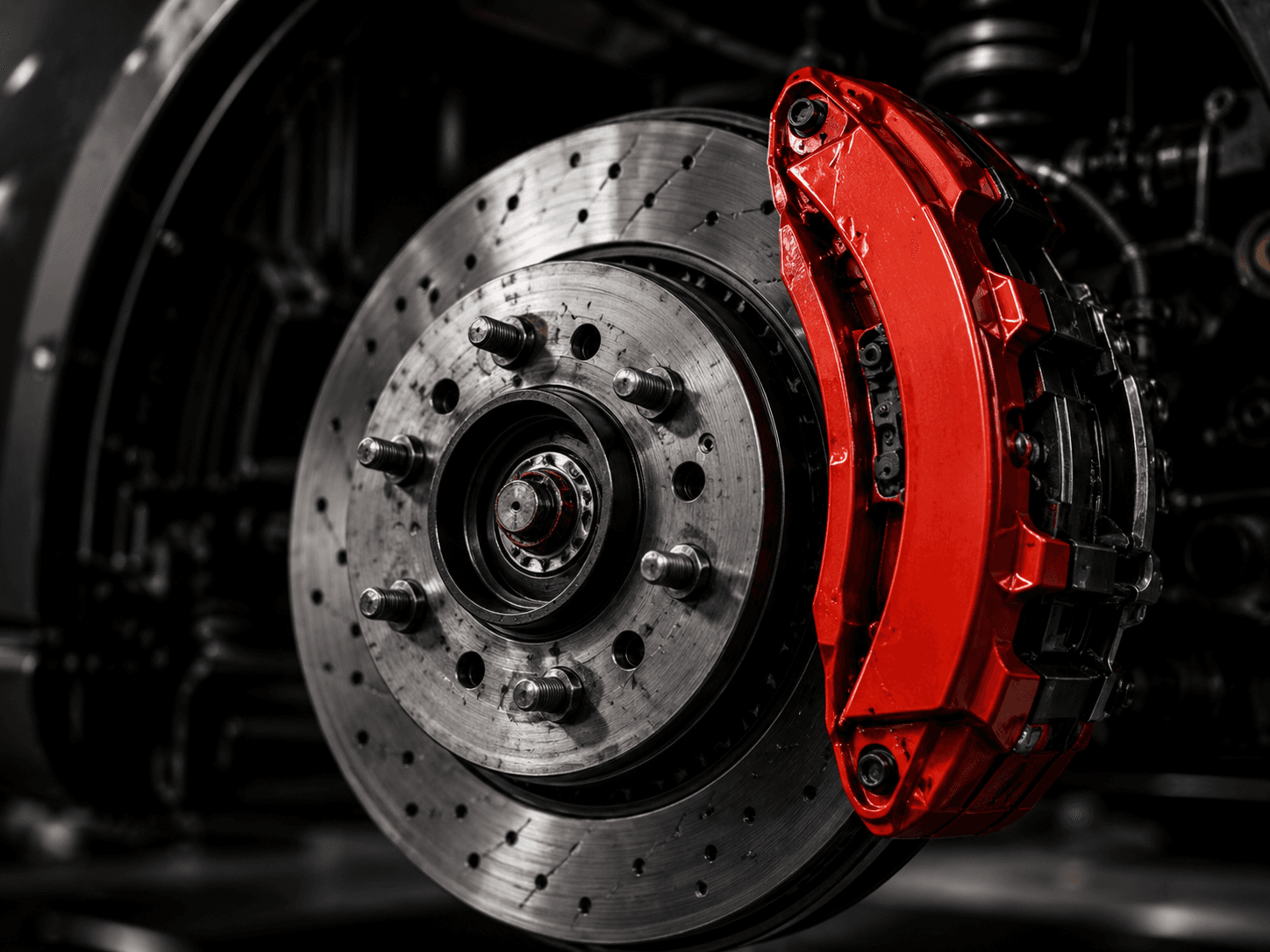
Brakes are the one system on a vehicle with no margin for optimism. Pads and rotors wear continuously, brake fluid absorbs moisture over time, and the hydraulic components that push it all together eventually leak or seize.
We measure rather than guess. Pad thickness and rotor runout are checked against the manufacturer's minimums, and we show you the readings so the recommendation is something you can see for yourself.
A guide to what this work typically covers. The exact scope depends on your vehicle and what we find once it's on the hoist.
A high squeal is often the wear indicator doing its job. Grinding means metal on metal — stop driving and book it in.
A pulse through the pedal or steering wheel usually points to rotor thickness variation or runout.
A pedal that travels further than it used to, or slowly sinks at the lights, can indicate air, moisture or a hydraulic leak.
Uneven braking is commonly a sticking caliper or a contaminated pad, and it changes how the car behaves in an emergency stop.
Brake fluid is hygroscopic — it draws moisture out of the air over time. Water lowers the boiling point of the fluid, and hot brakes on a long descent can turn that moisture to vapour, which compresses where fluid does not. The result is a pedal that goes soft exactly when you need it most. Most manufacturers specify a fluid change every two years regardless of distance travelled.
Rotors can sometimes be machined back to a true surface, but only if enough material remains above the manufacturer's minimum thickness. Where a rotor is already close to that limit, machining it is a false economy — it will run hotter, wear faster and need replacing sooner.
If your question isn't covered here, call the workshop and we'll talk it through.
It varies enormously with driving style, vehicle weight and whether you drive in traffic or on the open road. Pad life is measured, not predicted — we check thickness at every service and let you know how much is left.
Tell us about your vehicle and we'll take it from there.