Suspension is a safety system before it is a comfort system. Shock absorbers keep the tyres in contact with the road surface, and a worn set measurably lengthens braking distances and makes a vehicle less predictable in an emergency swerve.
Because the decline is gradual, most drivers adapt to it without noticing. It is usually only after the work is done that people realise how much the car had changed.
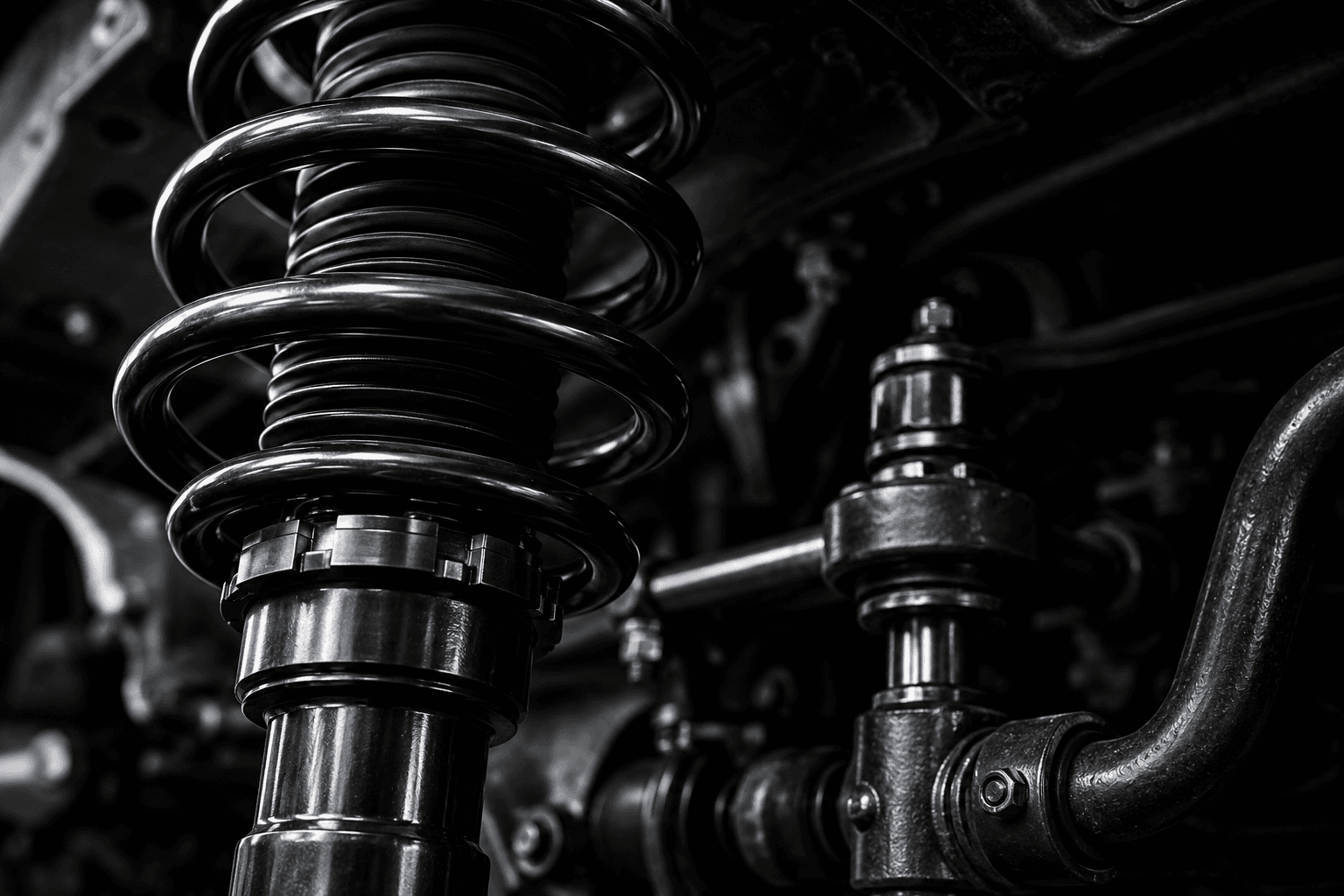
A guide to what this work typically covers. The exact scope depends on your vehicle and what we find once it's on the hoist.
A knock from the front over speed humps usually means a worn bush, link or ball joint.
Continued bouncing after a bump, or a nose that dives heavily under braking, points to tired shock absorbers.
Constant small steering corrections to hold a lane suggests worn steering or suspension components.
Scalloped or feathered wear often traces back to suspension wear rather than the tyres themselves.
Heat, unsealed roads and long distances all shorten the life of rubber suspension components. Bushes perish and crack from the inside long before the failure is obvious from a walk around the car, which is why the inspection is done with the vehicle raised and the components loaded.
Shock absorbers and springs are replaced as an axle pair. Fitting one new component alongside a worn one leaves the car handling differently left to right — which is precisely what you do not want in an emergency manoeuvre.
If your question isn't covered here, call the workshop and we'll talk it through.
There is no fixed figure — it depends on road conditions, load and kilometres travelled. They are inspected as part of every service, and we will tell you when they are measurably past their best.
Tell us about your vehicle and we'll take it from there.