Overheating does damage quickly and the damage is rarely cheap. A head gasket, a warped head or a seized engine all begin with a cooling system that stopped removing heat — often because of a part worth a small fraction of the repair it caused.
An engine that runs hot is a symptom with several possible causes: coolant loss, a thermostat stuck shut, a failing water pump, a radiator that has silted up, or a fan that is no longer running. We test to find which, rather than replacing parts in sequence.
A guide to what this work typically covers. The exact scope depends on your vehicle and what we find once it's on the hoist.
Stop driving and let it cool. Continuing to drive an overheating engine is what turns an inexpensive repair into an expensive one.
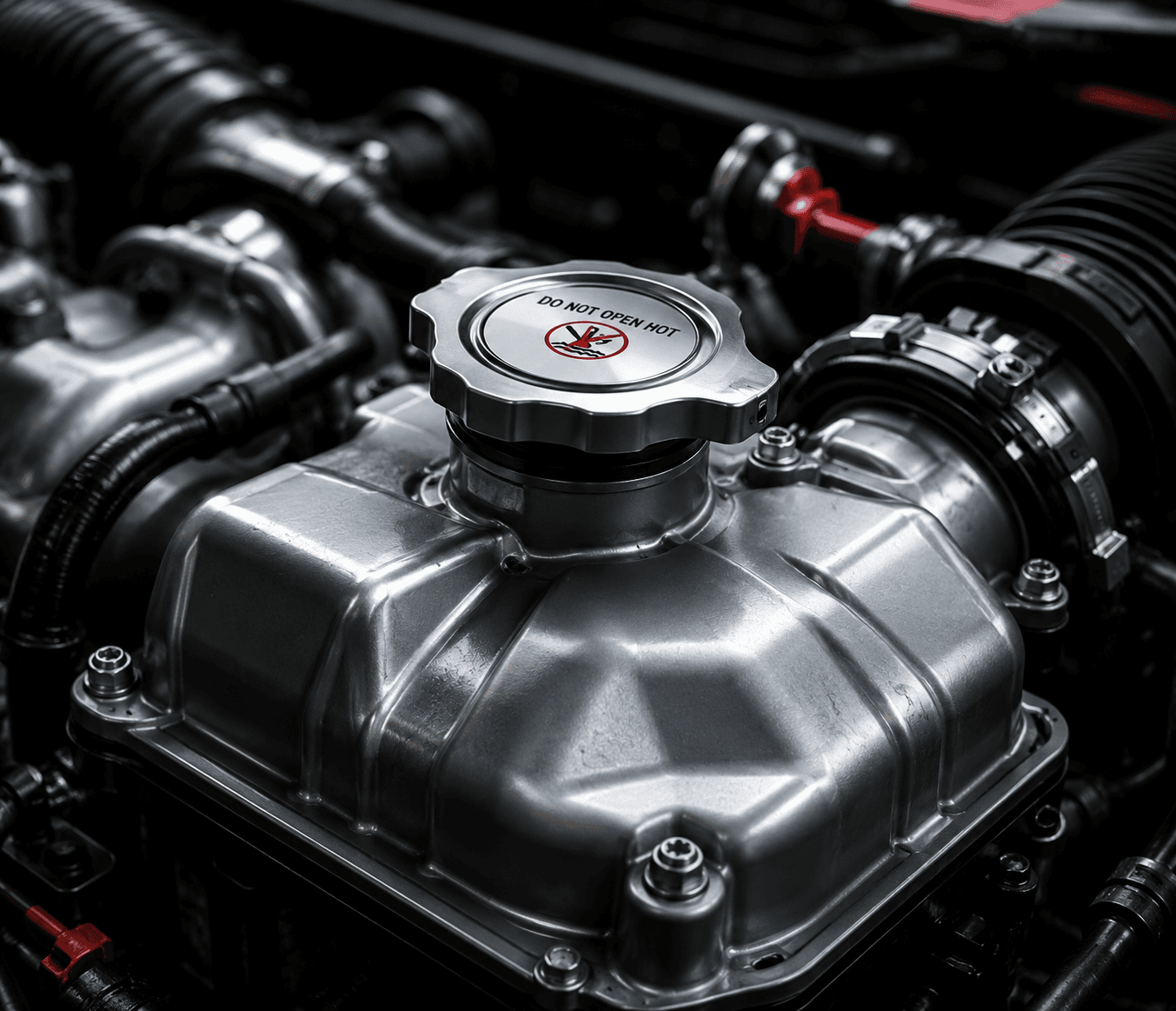
Coolant can escape through the radiator cap, evaporate from a slow weep, or be consumed internally through a head gasket. A pressure test distinguishes them.
Cabin heat comes from engine coolant. A heater that has stopped working can indicate low coolant, an airlock or restricted flow.
Modern coolants are not interchangeable. The wrong specification, or plain water topped up repeatedly, can corrode the system from the inside and shorten the life of the pump and radiator. We refill to the manufacturer's specified type and concentration.
Many cooling leaks only appear once the system is up to pressure and temperature, then evaporate off hot components before they ever reach the ground. Pressure testing reproduces those conditions cold, so the leak can be seen and traced.
If your question isn't covered here, call the workshop and we'll talk it through.
Yes. Overheating is a symptom of a fault that has not fixed itself, and the second occurrence may be the one that causes damage.
Tell us about your vehicle and we'll take it from there.