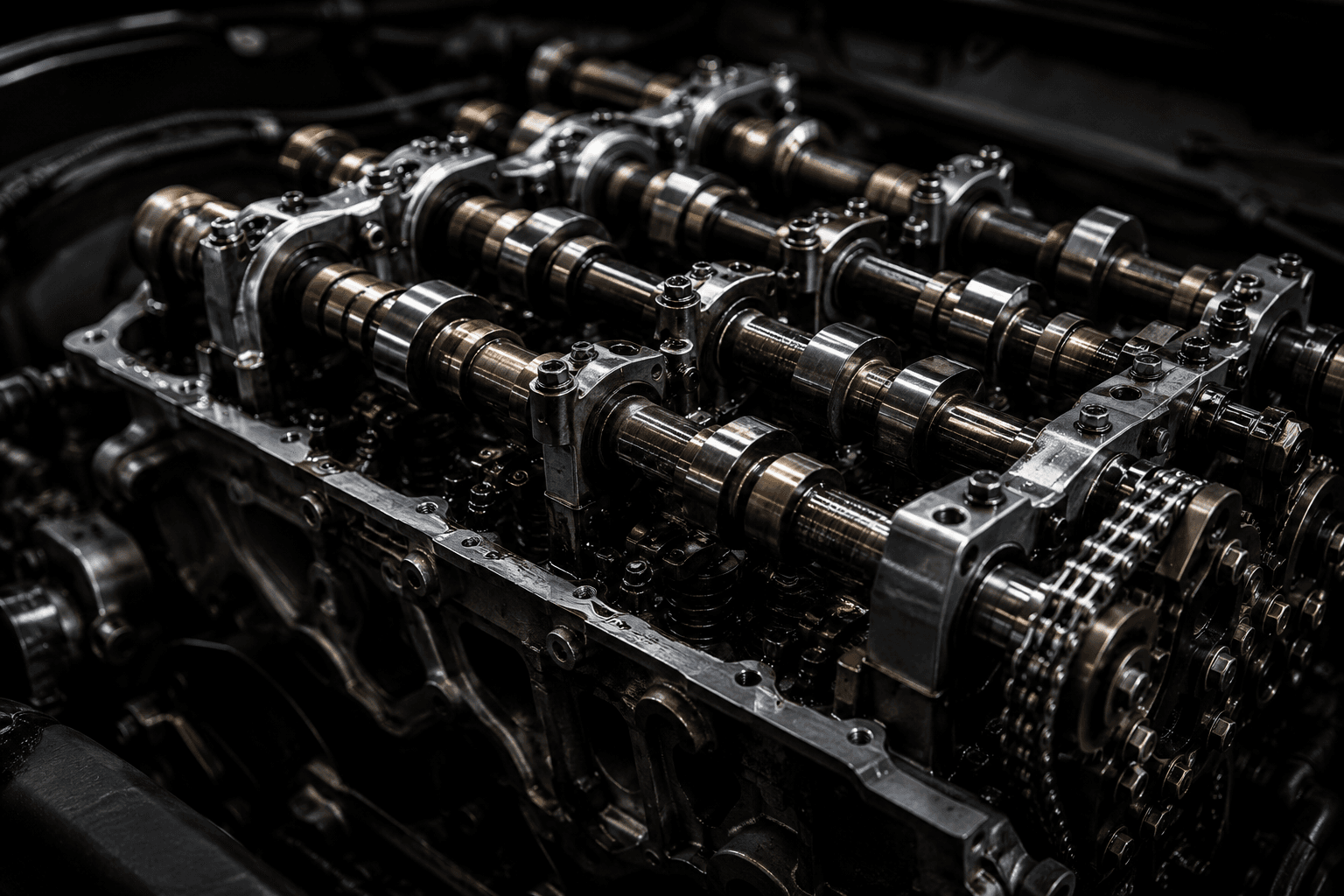
The timing belt or chain keeps the crankshaft and camshafts turning in step. On an interference engine — which most modern engines are — losing that synchronisation while running lets pistons and valves meet, and the resulting damage is usually far more expensive than the belt that caused it.
Belts are replaced on an interval set by the manufacturer, in kilometres or years, whichever falls first. Chains are designed to last longer but are not maintenance-free: they stretch, and the tensioners and guides that control them wear.

A guide to what this work typically covers. The exact scope depends on your vehicle and what we find once it's on the hoist.
On a chain-driven engine this often points to a tensioner losing pressure at rest. It is worth investigating rather than waiting.
If there is no record of the belt being done and the vehicle is past the interval, treat it as due. The failure mode is not a gradual one.
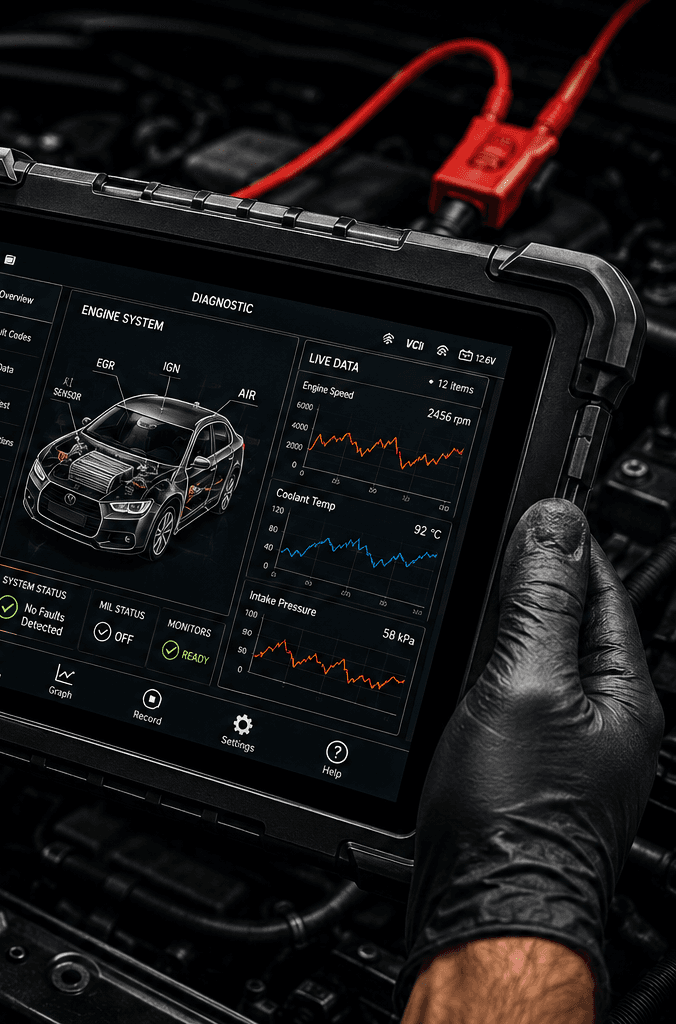
Correlation codes between camshaft and crankshaft position can indicate a chain that has stretched far enough to shift the timing.
On engines where the timing belt drives the water pump, the labour to reach the pump is almost entirely the labour to reach the belt. Replacing the pump at the same time costs a fraction of doing it separately later — and a pump that seizes will destroy the new belt.
A belt is a scheduled replacement item with a defined interval. A chain is replaced on condition, when inspection or fault codes show the chain, tensioner or guides have worn. We will tell you which your engine uses and what it actually needs.
If your question isn't covered here, call the workshop and we'll talk it through.
The interval is set by the manufacturer and appears in your logbook, expressed in kilometres and years. We can confirm the figure for your vehicle and check what records exist.
Tell us about your vehicle and we'll take it from there.